For researchers working in quantum materials research, spintronics, 2D materials, superconductivity, and nanoscale photonics, the answer is increasingly yes — but with important caveats.
Performing optical measurements inside a cryogenic, high-magnetic-field environment has historically involved difficult tradeoffs. Conventional cryostats often restrict optical access, introduce mechanical vibration from cryocoolers, complicate sample alignment, or limit the types of measurements that can realistically be performed in situ. These limitations become especially problematic when experiments rely on high spatial resolution, interferometric stability, or long acquisition times.
At the same time, modern condensed matter and quantum optics experiments increasingly depend on non-contact optical techniques to probe fragile or nanoscale phenomena without disturbing the sample itself. Raman spectroscopy, magneto-optical Kerr effect (MOKE) measurements, photoluminescence mapping, time-resolved spectroscopy, cryogenic microscopy, and near-field optical techniques all benefit from the ability to interrogate a sample optically while maintaining precise environmental control.
The challenge is not whether optical measurements are possible at low temperature and high field. The challenge is whether they can be performed reliably, reproducibly, and with sufficient optical and mechanical stability for modern research.
Why Non-Contact Optical Measurements Matter
Non-contact optical techniques are attractive because they can probe electronic, magnetic, vibrational, and structural properties without introducing electrical contacts or mechanical perturbations. In many quantum materials and low-dimensional systems, even minimal physical interaction with the sample can alter the measurement.
Researchers increasingly rely on optical methods to investigate:
- Spin and valley dynamics in 2D materials
- Magneto-excitons and correlated electronic states
- Quantum defects such as nitrogen-vacancy centres in diamond
- Ultrafast carrier dynamics
- Magnetic domain behaviour in thin films
- Superconducting phase transitions
- Strain and phonon coupling through Raman spectroscopy
Many of these phenomena only emerge at cryogenic temperatures and under applied magnetic fields. This creates a demanding experimental environment where optical access, thermal stability, and vibration isolation all become critical simultaneously.
The Core Technical Challenges
1. Mechanical Vibration
Closed-cycle cryogenic systems are attractive because they eliminate liquid helium handling and reduce operating costs, but mechanical cryocoolers can introduce vibration that degrades optical measurements.
For microscopy, interferometry, or near-field techniques, even nanometre-scale motion can reduce spatial resolution or destabilise focus. This is especially important for scanning probe methods, confocal microscopy, and high numerical aperture imaging.
Several recent cryogenic microscopy platforms have highlighted vibration isolation as one of the primary engineering obstacles in combining high magnetic fields with optical access and cryogenic temperatures.
2. Optical Access Constraints
Traditional superconducting magnet geometries can severely limit optical pathways. Narrow bores restrict working distance and numerical aperture, while limited window access complicates transmission or multi-axis optical experiments.
Researchers often need:
- Multiple optical paths
- Simultaneous excitation and collection geometries
- High numerical aperture objectives
- In-plane and out-of-plane optical access
- Compatibility with free-space optics and fibre coupling
These requirements become increasingly difficult when large magnets and thermal shields occupy most of the experimental volume.
3. Thermal Stability and Sample Drift
Optical measurements performed over long acquisition times require stable temperature control and minimal sample drift. Even small thermal fluctuations can shift focus, alter alignment, or affect spectral measurements.
This becomes particularly important in:
- Raman mapping
- Time-resolved spectroscopy
- Cryogenic photoluminescence
- Magneto-optical imaging
- Near-field scanning optical microscopy
4. Integration Complexity
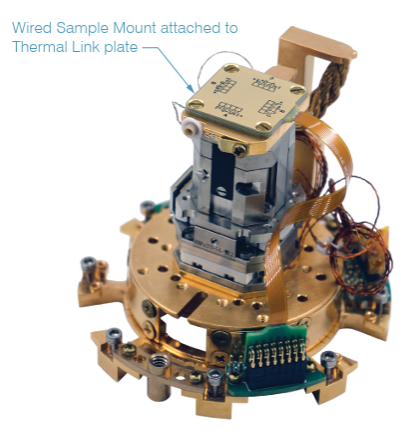
Many advanced optical experiments involve additional hardware such as nanopositioners, RF cabling, microwave delivery, fibre optics, or custom sample stages.
Researchers often spend significant time designing custom inserts and adapters simply to integrate their optical setup into a cryogenic environment.
What Makes Practical Optical Measurements Possible?
A practical high-field optical cryogenic platform typically needs to satisfy several conditions simultaneously:
- Low vibration operation
- Large and flexible optical access
- Stable temperature control
- Sufficient sample volume for custom instrumentation
- Automated field and temperature control
- Compatibility with microscopy objectives and nanopositioning systems
- Fast experimental turnaround without excessive cryogen handling
Historically, achieving all of these requirements in a single platform has been difficult.
The Shift Toward Cryogen-Free Optical Cryostats
Modern cryogen-free optical cryostats have helped reduce some of these barriers by combining superconducting magnets with integrated optical access and vibration management.
This has opened the door to experiments that were previously limited to highly customised laboratory systems.
- Cryogenic magneto-optical Kerr effect measurements
- Raman and FTIR spectroscopy under magnetic field
- Quantum optics experiments involving colour centres
- Cryogenic AFM and scanning near-field optical microscopy
- Time-resolved magnetic spectroscopy
- Magneto-terahertz imaging
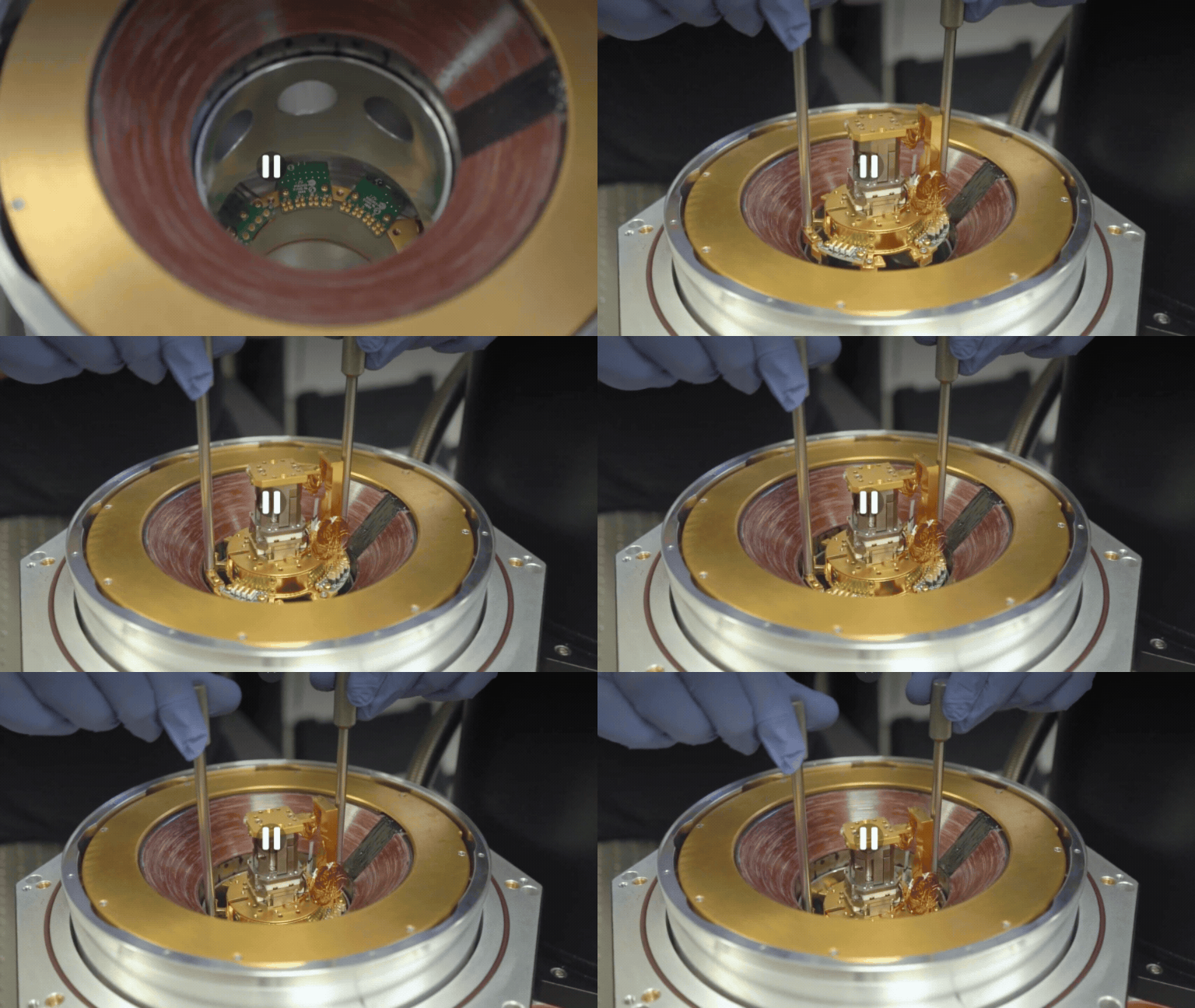
Researchers are also increasingly combining optical and scanning probe techniques within the same cryogenic platform.
A notable example is the development of cryogenic magneto-scanning near-field optical microscopy systems capable of operating at temperatures below 2 K and magnetic fields approaching several tesla simultaneously. These systems demonstrate how optical and nanoscale measurements are converging in quantum materials research.
Similarly, researchers at Stony Brook University demonstrated AFM and scanning near-field optical microscopy operation within a cryogenic high-field optical platform, emphasising the importance of low vibration performance and broad optical accessibility for nanoscale measurements.
Practical Considerations for Researchers
When evaluating whether a system can realistically support non-contact optical measurements at low temperature and high field, researchers typically consider a few practical questions.
Can the system maintain optical alignment during cooldown?
Mechanical contraction during cooldown can shift optical alignment significantly. Systems designed specifically for optical work generally minimise these effects through stable sample mounting and integrated optical geometries.
Is the vibration low enough for microscopy?
Low-vibration operation is essential for high-resolution imaging and scanning probe integration. Specifications below 10 nm peak-to-peak vibration are increasingly becoming important benchmarks for demanding optical microscopy experiments.
Is there enough optical access?
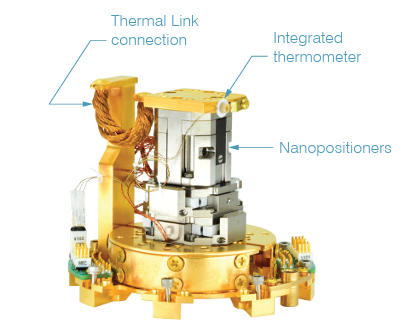
Optical access is often underestimated during system planning. Multiple side windows, top access, and optional bottom access can dramatically simplify experimental geometry and reduce the need for custom optics.
Can custom experiments be integrated without rebuilding the cryostat?
Flexible sample mounting, modular wiring, optical fibre feedthroughs, RF compatibility, and nanopositioner integration can substantially reduce experimental setup time.
Can the platform support future experiments?
Researchers often begin with one measurement technique and later expand into microscopy, spectroscopy, or correlated measurements. A flexible platform can extend the useful lifetime of a cryogenic system considerably.
Where the OptiCool Fits
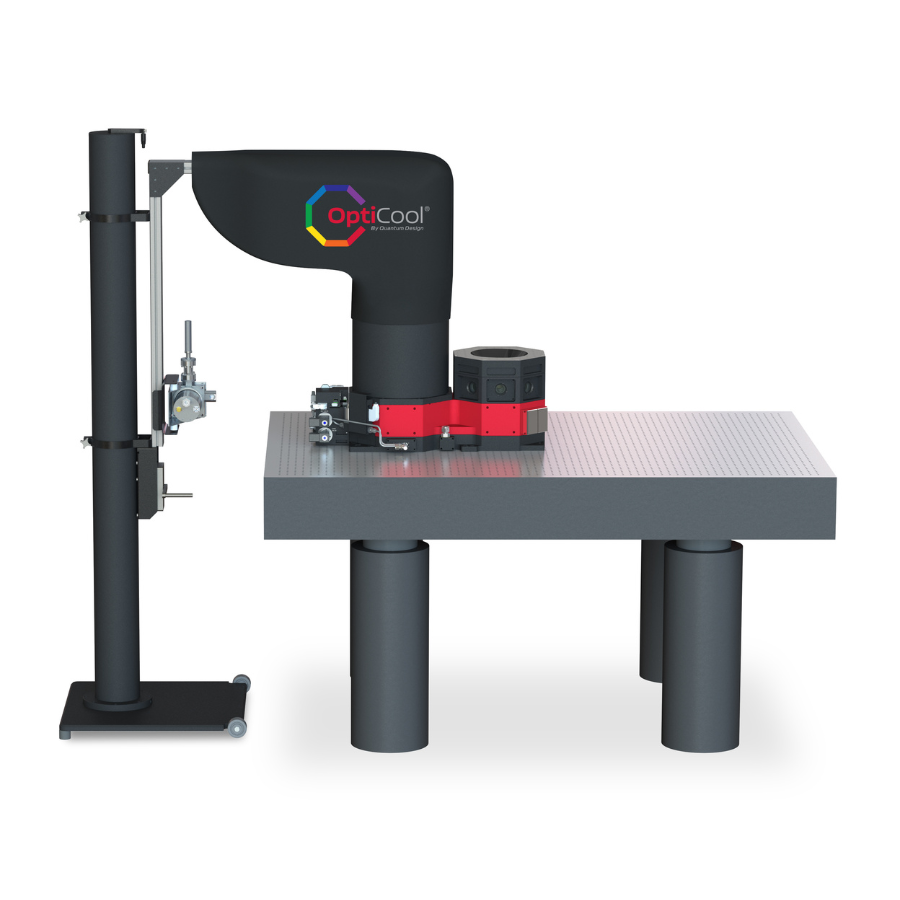
One example of this newer generation of systems is the OptiCool platform from Quantum Design.
Rather than functioning as a general-purpose cryostat with limited optical capability, the system was designed specifically around optical measurements in cryogenic and high-field environments.
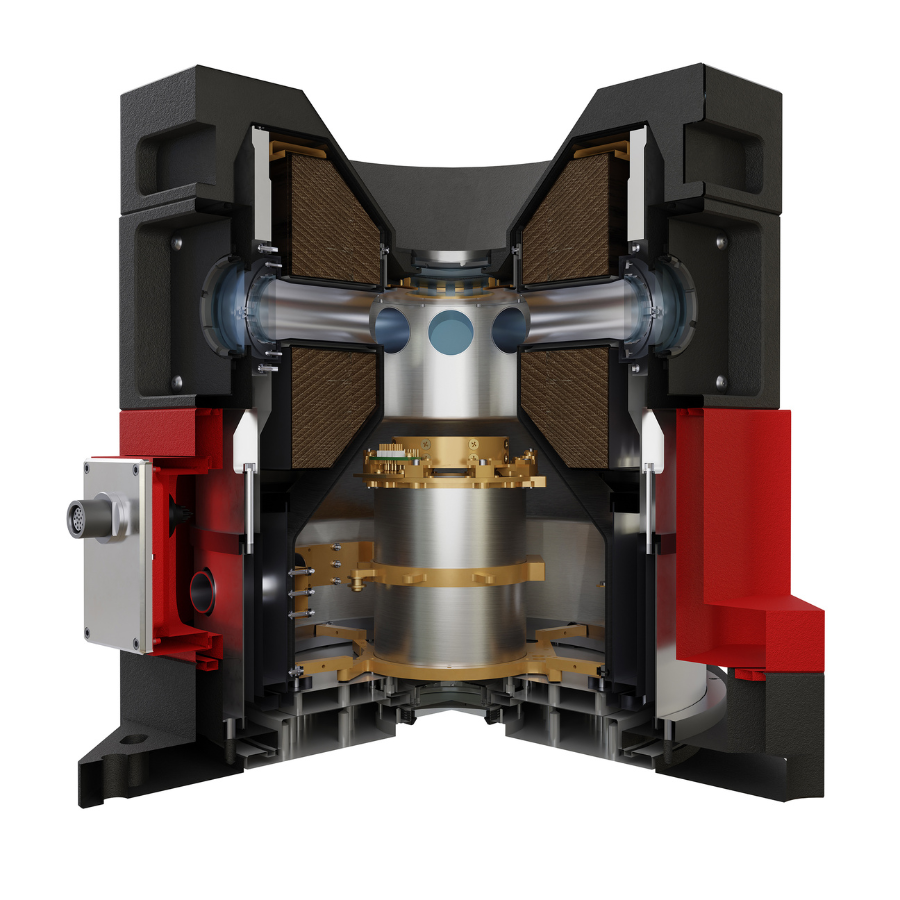
Several aspects are particularly relevant from a practical research perspective:
- Cryogen-free operation with automated temperature control from 1.7 K to 350 K
- Magnetic fields up to 7 T, with vector magnet configurations also available
- Multiple optical access ports, including side, top, and optional bottom access
- Low vibration performance specified below 10 nm peak-to-peak
- Large experimental volume for custom optical setups
- Compatibility with nanopositioning systems, RF cabling, and optical fiber feedthroughs
- Support for high numerical aperture optical configurations
Importantly, the system appears designed to reduce the amount of custom engineering researchers must perform before beginning experiments. Features such as modular sample pods, objective mounting options, and configurable optical access address many of the practical integration challenges common in cryogenic optical research.
The platform has been used across applications including:
- Raman and FTIR spectroscopy
- Magneto-optical Kerr effect measurements
- Quantum optics
- Studies of 2D materials
- Cryogenic microscopy
- Spintronics
- Time-resolved magnetic spectroscopy
- AFM and near-field optical measurements
For researchers planning experiments in quantum materials or cryogenic photonics, these practical considerations can matter just as much as headline specifications.
Conclusion
So, can researchers perform non-contact optical measurements inside a high-field cryogenic environment?
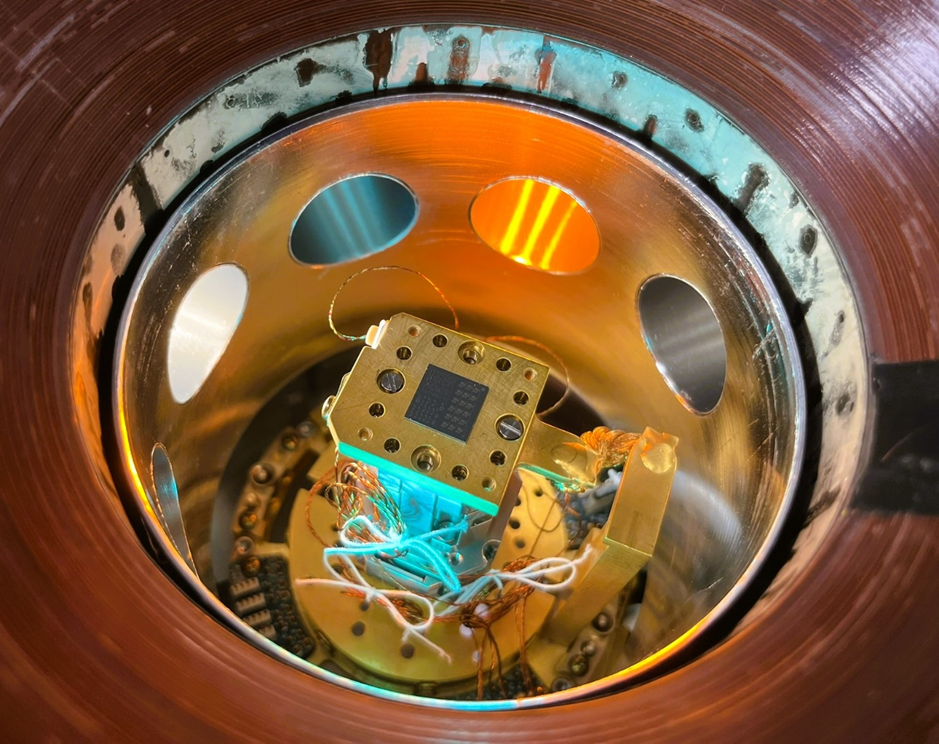
Today, the answer is clearly yes — provided the system is engineered specifically for optical stability, vibration control, thermal performance, and experimental flexibility.
The limiting factor is no longer simply achieving low temperature and high magnetic field simultaneously. Increasingly, the challenge is enabling sophisticated optical measurements without compromising accessibility, stability, or experimental efficiency.
As optical methods continue to play a larger role in quantum materials and nanoscale research, platforms that combine low vibration, broad optical access, and modular experimental integration are becoming increasingly important infrastructure for modern laboratories.
Selected Publications and Related Reading
- R. Qi et al., “Perfect Coulomb drag and exciton transport in an excitonic insulator,” Science 388, 278 (2025).
- Quantum-enhanced nonlinear microscopy, Nature 594, 201–206 (2021).
- Spin photovoltaic effect in magnetic van der Waals heterostructures. Sci. Adv. 7 (2021).
- NPL’s OptiCool system provides new light-enabled measurement techniques, BMTA, (2025)
- Photocurrent Nanoscopy of Quantum Hall Bulk. Phys. Rev. X 15. (2025).
- Magnetoelectric Coupling in Multiferroics Probed by Optical Second Harmonic Generation. Nat Commun 14, (2023).
- Balanced-detection Raman-induced Kerr effect microscopy, CLEO 2012.
- New AFM Built Inside OptiCool, British Cryogenics Council
- Infrared nano-imaging of Dirac magnetoexcitons in graphene. Nature Nanotechnology (2023).
- Quantum Design OptiCool product publications.
Combining extreme experimental conditions and flexibilities in experiment design offered by the OptiCool system provides an exciting playground pivotal for the manipulation and study of quantum light and quantum matter.
Dr Nathaniel J. Huáng, Senior Scientist and Principal Investigator of Quantum Light and Matter, NPL

Want to discuss your upcoming quantum materials/cryogenic photonics research?
Get in touch with Dr. Luke Nicholls by email below or call (01372) 378822.

Technical Service & Application Support
You can learn more about our superb Service Team here.